The Developers of No Law Know Everyone Will Compare It to Cyberpunk 2077, but There Are Important Differences


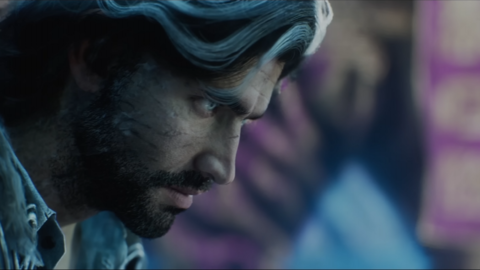
Fresh from its reveal at The Game Awards 2025, first-person open world shooter RPG No Law is already raising eyebrows for looking a fair bit like CD Projekt’s Cyberpunk 2077. It turns out developer Neon Giant expected those comparisons, but are keen to point out important differences.
No Law is the next game from the developer of The Ascent, the well-received cyberpunk-themed twin-stick shooter that launched in 2021. No Law sees Neon Giant shift perspective not just in terms of the camera but tone, to a more grounded cyberpunk aesthetic that revolves around a single city. And based on the debut trailer, No Law is giving off big Cyberpunk 2077 vibes.
In an interview with IGN ahead of the announcement, co-founders and co-creative directors Tor Frick and Arcade Berg explained why Neon Giant went with a brand new game rather than, say, The Ascent 2, or even going for a first-person The Ascent follow-up. We talk about everything from the feel of the city to the combat, the impact of dialogue choices to the fun-looking kick attack.
IGN: How did you settle on this as a project, as well as a shift into first-person?
Tor Frick: Actually both me and Arcade, but also a big part of the team, we actually come from a first-person games background. And for us it was The Ascent that was the new and uncharted territory where we had never made a twin-stick shooter, anything like that before. So with this game we actually feel like we are going back to our roots and the things that we are more comfortable with as developers. So that’s a huge part of it. We wanted to make something that the team is very passionate about and something that fits the individuals in the team. We have worked on a lot of first-person franchises through the years, a big chunk of the big ones, and for us, this is something that we just felt comfortable in trying to take on something more ambitious. We are familiar with making pretty high fidelity ambitious first-person games, especially single-player games. So for us it was a natural step. What do we want to do as a team? It was to take a first-person, single-player game and push that further.
I think also with the first-person perspective, a big reason for that as well is that, in The Ascent we focused a lot on the world-building and the lore and the mood, and we really like building games where you can immerse yourself in the world. That was something we really wanted to go a lot deeper with this game. Because in first-person you can actually appreciate all the little storytelling, and there’s just a lot more stories to tell. And that’s something that we missed with The Ascent a little bit, to be a little bit more intimate with everything. So that’s a big reason as well.
IGN: I wonder if you were inspired by the incredible modding work that went on with The Ascent. I remember seeing footage of the game in first-person, and it looked incredible, almost like it was born to be that sort of thing. And I wonder if seeing that maybe played a part?
Arcade Berg: I don’t think that changed it, but we were very happy when that happened. There was a lot of good buzz surrounding The Ascent for it. And the good thing is that when someone on the internet makes something, we don’t have to be held responsible. But it was so much fun for us, that and photo mode are just two amazing things for the game and for us the studio, just seeing how much people care and how it got longevity thanks to that. Because The Ascent has a beginning, middle and end, it’s not an ongoing live service product. So it’s a lot of fun to see that people are still to this day posting stuff.
IGN: The Ascent was incredibly detailed. Based on the trailer for No Law, you’re doing the same thing here.
Tor Frick: Yeah, for sure. I think that’s something we definitely wanted to push a lot in this game. We want the fidelity to be extremely high and the density to be extremely high. For us it’s more important to have density than to have size. And that goes for everything, not just art assets but the game itself. We want to make something that feels intimate, both the small spaces you’re in but also… it isn’t a sprawling thing. It’s a very intimate detail and high density world and game.
Arcade Berg: It’s also fun because whilst there’s a lot of stuff that is very reminiscent of The Ascent and there are things you’ll recognize because we like them and it’s the same guys making it, so you’ll see a lot of that same DNA if you will, it’s still a very fun challenge. Because while The Ascent is pure sci-fi, everything is designed to be in this arcology, right? This game is much more grounded. It’s still cyberpunk, it’s still high tech, it’s still very cool. It’s very important for us that everything you do in our games is still grounded within the fiction of that world. It always makes sense in that world. But in this city you are on the ground, there is vegetation, there is life, it’s a different type of cyberpunk world. So there’s again, creatively, things we now have to have different solutions for than what we chose to do in The Ascent.
So it’s not that we are rehashing The Ascent’s world but now in first-person. It’s a completely new setting. I think it’s a very exciting setting. Hopefully players will agree when the game is out! But it’s a lot of fun to just explore and immerse yourself in. So we’ve really gone to town with that one. So for example, we do the things you’d expect, we do have day night cycles, weather, living world, all of that. So you really can immerse yourself in the city and walk around and be amazed with the distinct difference of it being on a park street at night or maybe in a more lush, calmer area in the daytime, except that they’re two different worlds but everything’s hosted in this city.
IGN: Were you tempted to put the camera in first-person and make The Ascent 2 as a first-person game? Was it ever a debate internally?
Tor Frick: Not really. I think we settled on that we want to make something new pretty quickly, and that’s because we are very keen that the world we create should fit the type of game we make, and the type of game we want to make did not a hundred percent align with the world of The ascent. So instead of trying to push The Ascent’s world into something it wasn’t before, we prefer to make something new where we can do things, for example, that are more grounded in some cases, and mechanics that just wouldn’t work. It needs to all work together. So we didn’t want to change The Ascent into something else, so that’s why.
Arcade Berg: Having said that, of course we loved The Ascent, and we did have a very, very brief discussion which basically was, if our goal is just to run a financially successful business, we should just start working on The Ascent 2 now. That’s guaranteed success, money in the bank, that’s what we should do. But again, that’s not why we started the studio, right? It’s like, no, we’re here because we’re creative people and right now we were probably a bit creatively spent on The Ascent. That’s not the next thing we want to do. So we started with something completely different, which again is a risk. I think it’s going to be a smash hit. I think people are going to love the game. I’m very proud of the game, but there’s never any certainty. But what I think is also the best honestly for the fans and for even the non fans players out there is that we try and deliver a fun, creative and inspired game. One of the things that I really appreciated with the feedback that we got for The Ascent, which I haven’t really seen in the same kind of vein with all the games we worked on previously in our career, was how people really read into there being some personality in the game, in the product. And that makes me very warm inside. I really hope we manage to do that now with this game as well, that people can say, I can feel this was created by people who cared. That’s very, very important. And I think that sometimes can disappear, right?
IGN: It’s a cyberpunk game, but I’m sure people will compare it to Cyberpunk 2077. You must be bracing yourselves for that. That’s a tough comparison. CD Projekt is hundreds of people spending years and years and years making a massive game. So how is it different not just in terms of mechanics and gameplay, but in terms of scope and tone?
Tor Frick: I think obviously every day we have to do that internally as well. Because we know what Cyberpunk is and we know people will compare us. But the game is very different and the world is very different. A lot of it is, it’s just the mood and the tone. Cyberpunk is a big, sprawling experience. It’s a mega city. And our game is a lot more intimate both when it comes to the gameplay mechanics but also the world. I think as people see more of the game that will be more apparent. It’s hard to do in a short trailer like that. I think you need to see and feel the game more. It is more of an intimate experience, like the world is deep but not so grand. And the same thing with mechanics and the same thing with the story. It is very, very personal and very, very reactive around you as a player, rather than being set in this grand backdrop.
Arcade Berg: And I think also, we have been very conscious about what references we’re using from fiction, whether that be books, comic books, movies, shows. We very seldom reference games because those games already exist. Of course we’re aware of what’s out in the market, we keep an eye on it. But creatively we are looking a lot at eighties, nineties action movies, or a certain mood there. We’re looking at Hong Kong action scenes. We’re looking at inspiring comic books, it could be American, it could be manga. Of course we have anime in there. But we’re just looking at a lot of different pieces of fiction as far as inspiration goes and we’re just trying to put all of that in here.
Something you saw in The Ascent as well, there is a slight tongue in cheek, right? We as creatives, we can’t write grim dark angsty. That’s not what we want. We want violence as a spectacle. We want you to have fun when you’re playing a game. That’s a very important feeling for us, to just have fun. There’s a mood, there’s a vibe, there’s a certain feeling that hopefully fans of The Ascent will recognize even though the gameplay is completely different.
IGN: It’s described as first-person and RPG. So what makes it an RPG?
Arcade Berg: You’re playing a written character. It’s about a character named Grey Harker, but you invest your XP in the skills, you unlock the abilities, you kit out the character’s gear. You have some visual customization, but still it’s of that character. We’re not giving a blank sheet. So it’s a lot about saying, well my guy, my version, I did this. And one of our development mantras we have is that if a hundred players play the game, they should have a hundred different user stories. When you and your colleagues meet and you talk about the game you were playing yesterday, it’s like, oh, you did it that way? Oh, because for me this happened because I’ve done this other thing before. And it will all tie back into how you’ve been playing the game, what choices you’ve been making, both in pure gameplay and also in dialogue choices. And it ties back to, well I invested a lot in lock picking, that kind of thing, so I just went in. It’s like, oh shit, yeah, no, I blew up the door. Both very valid. The player can never play the game wrong. That’s something we’re always saying. So it’s that kind of development.
IGN: Can you shape the story through dialogue choice or is the story linear and you just have choices within it that affects certain things?
Tor Frick: The scope is a bit hard to describe, but yeah, it’s a game that has a beginning and an end. It’s not an ongoing thing, right? It’s a narrative game. It has a beginning and an end. What happens in between there? The player can’t play the game wrong. So a lot of what unfolds and how it unfolds is up to the player.
IGN: How impactful are those decisions you make in dialogue? How different can the experience be through something like that?
Arcade Berg: Extremely. So dialogue is not where we’re putting all the gunpowder. I don’t want to put out false pretenses. It’s not dialogues the game. The dialogues are there to help build character, to help set up scenes to help you make certain decisions and choices and consequences or reactions. But that’s not where our strengths lie. But they can carry a lot of weight, and there are things I want to tell you, but I’m not going to spoil it for anyone, right? There’s going to be a lot of talk about certain things in this game, which I’m very excited for. So the consequences can go from minute to very, very large.
IGN: In the trailer we’re able to kick someone off a building, which looks like a lot of fun. How will the combat work?
Tor Frick: We really want to focus on the player having a lot of interesting tools to use at their disposal. So even though we have guns, you shoot them, they sound great, they feel great, we want there to be a lot more to it. We like that heavy type of action, same as in The Ascent where things should go boom in a very satisfying and loud way. But at the same time we want there to be a lot of tools and a lot of fun things for the players to experiment with. We want it to be very much a toolbox where players can… it’s up to the player how to approach things. Some people will just go guns blazing with a revolver and SMG through the front door. Some people will do a very elaborate plan including all kinds of tools and gadgets, but it still ends up in explosions. Some people will play it and it’ll be quiet as a mouse. So it is very much up to the player.
Arcade Berg: When you continue to play the game, the characters in the world will comment on the ways things played out. So if you are the ghost, right, if you are that tactical guy, people will say, clean work, man, well done! Or they’re like, what the F just happened? We heard it from over here. We basically measure the impact you’re having, the playstyle that you’re choosing, how that is affecting everything. So we’re not saying that one is better or worse or more right or preferred, but we’re always trying to respond to the kind of character you’re playing. So that is not always the same, well done soldier no matter what you did, because sometimes it wasn’t that well done and sometimes you were very loud sometimes like, oh I didn’t even realize you were done… perfect, because I’m stealth. So we really want to listen to that through the game to react to the way you’ve been playing. We think that’s more fun than just the dialogue option.
IGN: Is kicking enemies a particularly important part of the combat?
Arcade Berg: It’s one of many features you can choose to use, but what usually happens when we let people play a build when we have playtests, as soon as they find that button and they’re in a city quickly, well everyone just goes like, boop! No, you can’t play the game wrong, but you’re kicking a lot of people right now!
No Law is in development for PC, PlayStation 5, and Xbox Series X and S.
Wesley is Director, News at IGN. Find him on Twitter at @wyp100. You can reach Wesley at wesley_yinpoole@ign.com or confidentially at wyp100@proton.me.