The Legend of Heroes: Trails beyond the Horizon Review
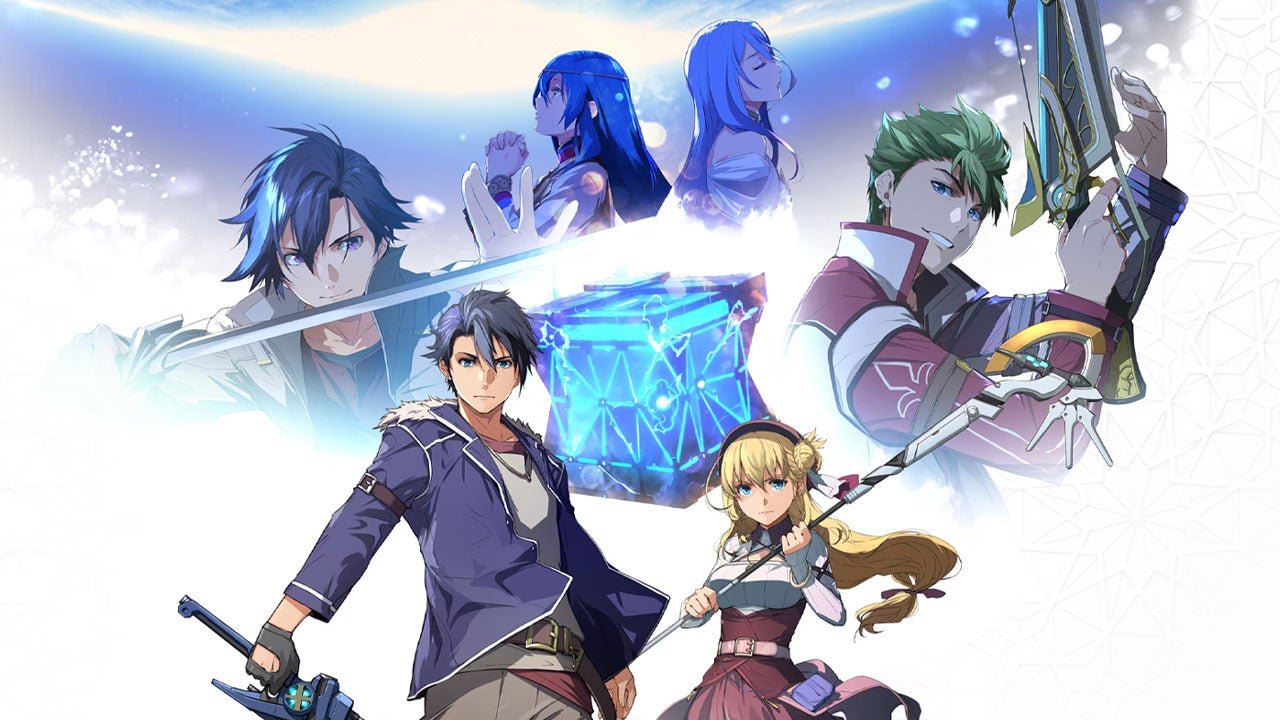

When a series such as Trails lasts as long as it has, sometimes things start to get weird. We’ve seen giant mechs, supernatural beings, and even multiversal time travel. After all of that, where else is there to go? Oh yeah, outer space! The vast, unknown territory of the final frontier is filled with possibilities, and The Legend of Heroes: Trails beyond the Horizon breaks through the atmosphere in order to tell a compelling sci-fi fantasy story filled with deception and intrigue. It also continues to refine the Daybreak saga’s hybrid action/turn-based combat system, with battles that are more engaging than ever before. The cliffhanger ending could make for a rocky re-entry for some, but when the dust settles, Trails beyond the Horizon manages to safely touch down as another enthralling RPG.
Picking up where Trails through Daybreak 2 left off, Trails beyond the Horizon sees the nation of Calvard attempt humanity’s first manned spaceflight, called Project Startaker. Like Trails into Reverie, the roughly 60 to 70-hour campaign is split between the perspectives of three characters: Rean Schwarzer, the Trails of Cold Steel saga’s protagonist, Kevin Graham, the lead of Trails in the Sky the 3rd, and Daybreak’s mercenary hero Van Arkride. Trails beyond the Horizon manages this balance well, but (unsurprisingly) it does mean this isn’t a good starting point for new fans – Van is the star, but it treats each of the three as a “main” character in their own way, so you’ll need to have played the two previous Daybreak games and be familiar with the Cold Steel saga, Reverie, and the third entry in the Sky trilogy to really get everything that’s going on.
That said, this story is still good on its own merits. Rean’s route kept me glued to the screen as he uncovered the real objective of Project Startaker and the conspiracy surrounding it. Kevin’s storyline is just as captivating as he picks up the mantle of “Heretic Hunter” once again,learning more about who his assassination target is and how to come to grips with it. Surprisingly, Van’s section is the most boring of the three (at least at first) as he and his crew fight off a mysterious new faction called the Vestiges. Van’s path is as long as the other two combined, and while that makes sense since Trails beyond the Horizon is his story, the first half of his route takes too long to build up, making the faster pacing of the other protagonists’ tales much more exciting by comparison. However, the way their stories tie in with Van’s towards the finale ultimately redeems it.
Trails beyond the Horizon also successfully manages the character bloat that plagued some previous Trails crossovers. It only includes a few key cast members from Rean’s Thors Academy days as both student and instructor, such as the lively student council president Towa Herschel and the calm but calculated Altina Orion. Kevin has Reverie’s Rufus, Nadia, Swin, and Lapis in tow, and new additions to both his and Van’s casts are smartly kept to a minimum as well.
Don’t fix what ain’t broken
If you played Daybreak 2, this review might sound familiar in spots, as Trails beyond the Horizon sticks quite close to that formula outside of combat. For instance, the Marchen Garten roguelite dungeon returns in the form of Grim Garten, and it’s the same drill as usual. You navigate it by playing a minigame, moving across a board and fighting monsters until you reach a floor’s boss. Only the first half of the dungeon is required for story purposes, with the second being entirely optional, but it’s a shame that Grim Garten isn’t available to continue playing through after the credits roll like Marchen Garten was. That’s a slight downgrade, as Marchen Garten gave a satisfying “post-game” feeling to Daybreak 2, letting me clean up other tasks as I prepared to jump into New Game Plus, that’s now missing.
Thankfully, Grim Garten still has the same worthwhile incentives to explore it periodically throughout the story. You can earn valuable skill points to level up your party’s attacks, as well as unlock cosmetics and useful items (all of which are earned in game, with no microtransactions involved whatsoever), and even learn more about the backstories of certain characters, which was particularly interesting for some of the antagonists.
Optional activities like this have always been an important part of previous Trails games, and deep side quests and fun bonding events make a return to Trails beyond the Horizon as well. Not only do they reward you with useful and rare items, they also provide a vast amount of insight into the world and the people who inhabit it. It was fun to see how Rean contacted Van, asking if he could accept requests from the city bulletin on his behalf in order to experience the mercenary life. One of my favorite quests involved busting an illegal casino chip trade, with the culprit behind it being a recurring character who has been cooking up schemes since the Crossbell games, Trails from Zero and Trails to Azure, 16 years ago. It’s a nostalgic touch that showcases how expansive this series is.
The LGC morality system from the first two Daybreak games makes a return, too: Sometimes when Rean, Van, and Kevin finish quests, they have the option to decide the outcome, which increases their affinity to either Law, Gray, or Chaos. In the first Daybreak game, your affinity determined which allies joined Van towards one of the later chapters. Disappointingly, like Daybreak 2, there’s no such impact in Trails beyond the Horizon, which made me once again question why the LGC system still exists in its current iteration at all. It was initially a standout feature that separated Van from other Trails heroes, so it’s disheartening to see the mechanic has actually regressed instead of evolved in any meaningful way, especially since it’s now tied to other protagonists as well. For example, what would a “chaos” aligned Rean look like, similar to his berserk “ogre” form from Cold Steel III and IV? Ideas like this could’ve been cool to explore.
At least the bonding events, called Connections, remain consistently delightful and charming, letting you hang out with other party members during major story beats. Not only do they offer fantastic character development, but they can also increase a character’s parameters, such as their attacking stats or chance that they’ll initiate a follow-up attack in battle. A favorite bonding event of mine was when Rufus reflected with Kevin about where he’s at in life – introduced all the way back in the first Cold Steel game, Rufus was a high-tier noble at the upper echelon of society, being recognized and revered wherever he went. A fall from grace and several (in-game) years later, he now spends his days in the shadows with his hair down looking after kids, but is content with himself. It’s a satisfying full-circle moment that had me reminiscing about my college days when I started playing the Trails series on my PlayStation Vita.
Teaching a new dog old tricks
Like the previous Daybreak games, Trails beyond the Horizon uses a hybrid turn-based/real-time action combat system. Out in the field, you can wail on enemies in real time in order to stun them. After successfully doing so, you can then transition to the turn-based battle system with an advantage, dealing extra damage right out of the gate. This was an imperfect but exciting system I liked when it was first introduced, and further refinements here make the field battles feel more fleshed out.
There are now ZOC abilities that let you temporarily stop time and get a few extra hits in, but the biggest game changer is the Awakening mechanic. Van, Rean, and Kevin can power themselves up to dish out more damage before going into turn-based combat. These Awakenings include Rean’s Spirit Unification, Van’s Grendal, and Kevin’s Stigma, which are clever ways of marrying a story-based power up and a previously turn-based exclusive-mechanic into a real-time action one. Even if the turn-based combat will always be where Trails thrives the most, it’s admirable that developer Falcom is continually iterating on the real-time elements to make them equally engaging.
The bulk of the turn-based combat is the same as previous Daybreak and Trails games at large. At the top of your screen sits a turn order timeline that you can plan around and manipulate. There are several bonus icons that will randomly align with either an ally or enemy on the timeline, which can range from bursts of healing or bypassing the casting time for magic to let a character fire off a spell right away. It’s important to pay attention to the timeline order as these bonuses can change the flow of battle, which makes for a compelling combat puzzle.
While “stealing” bonuses was possible in Daybreak 2, you could only do so when enemies were stunned or unconscious, and Trails beyond the Horizon slightly revised this mechanic to make it more accessible. If you activate a Shard Boost from your Boost Gauge to power up your next attack and then strike an enemy, you’ll grab whatever bonus was aligned with it and transform it into a more powerful “Plus” version, increasing the effectiveness of it for yourself. Steal a Zero Arts bonus? Not only will your next spell be cast immediately, but its power jumps up by 50%! This adds an extra layer of clever planning to an already well-thought out battle system.
Alternatively, you can still use skills that can inflict Delay on an enemy, pushing a bonus further down the timeline to hopefully land on an ally. In fact, this tactic has even gotten an update in Trails beyond the Horizon as successfully delaying an enemy while under a Shard Boost will also spawn a “Plus” version of that same bonus on the timeline during the next turn. These minor yet impactful boons make the combat more strategic and engaging. They can mean the difference between victory and defeat, especially against the hardest enemies later on.
Positioning, once again, is also crucial to combat. Each skill has a certain attack pattern, whether it’s a circle, cross, or a straight line. Maneuvering your characters so that you can hit as many enemies as possible ensures you get the most out of each action you take. Skills also have secondary effects. For example, Rean’s Sixfold Gales skill inflicts Delay, but also gets a damage buff if the enemy is struck from behind. Even if Rean can’t get behind an enemy, the skill is still useful as the Delay effect can help push a timeline bonus away from it. Trails has always had these mechanics, but the consistent quality and improvements between all of the entries is impressive, and a big part of what makes this combat system unique.
The biggest addition to Trails beyond the Horizon’s turn-based combat is the introduction of Shard Commands. These are basically upgraded versions of Brave Orders from Cold Steel III, IV, and Reverie. By consuming portions of your Boost Gauge, you can apply party-wide buffs that last for a limited number of turns. They can drastically turn the tide of battle, with effects like reducing incoming damage down to 30% or decreasing casting time for spells. Shard Commands are also more flexible than Brave Orders. In previous Trails games, bosses could enact their Brave Orders, called “Disorders,” to overwrite your own, but you couldn’t do the same thing back. You’re now able to overwrite boss Anti-Shard Commands with your own, but it’ll consume an extra bar in your Boost Gauge on top of the normal cost. It’s a smartly implemented trade-off that levels the playing field and feels fair.
Additionally, using two bars of your Boost Gauge activates ZOC and lets characters act twice in a row. In previous Daybreak games, you were incentivized to mainly conserve your Boost Gauge to fire off a character’s S-Crafts (ultimate attacks), so between Shard Commands and ZOC, as well as the aforementioned new bonus stealing mechanics, you have exciting new choices for how to spend it.
Finally, the customization options remain largely unchanged from the two previous Daybreak games, but that’s not a bad thing since it provides the same kind of fun as tinkering in a toybox and getting lost for hours while optimizing your party’s full potential. Slotting elemental gems, called Quartz, into one of four available lines for a variety of perks is still a clever system. It’s fun to experiment with different elemental combinations and values in order to unlock more potent Shard Abilities, including ones that can help outside of battle – like Golden Eye, which marks every treasure chest on your map in the area, ensuring that you’ll never miss any useful items. The Quartz system has been polished over the past two decades and has become one of the most flexible in any modern RPG.