Return to Silent Hill Movie Review

This is a spoiler-free review of Return to Silent Hill, which opens in theaters on January 23, 2026.
Return to Silent Hill doesn’t necessarily have the highest bar to clear as it ambles its way to theaters in this winter lull period. Hollywood may have finally figured out how to do a proper video game adaptation on the streaming side of things, but decent video game movies are still pretty few and far between. And while director Cristophe Gans’ 2006 Silent Hill movie was a decent effort, the follow-up, 2012’s Gans-less Silent Hill: Revelation, is as dreadful as they come. All Return to Silent Hill has to do is not be the worst entry in the series. And it manages that, if not a great deal else.
While the previous two films borrowed fairly liberally from the first and third Silent Hill games, neither is what could be considered a direct adaptation. Return to Silent Hill, by comparison, is basically Silent Hill 2: The Movie. It doesn’t really seek to continue the mythology established in the previous films, but rather presents a standalone tale set in the spooky, ash-strewn streets of Silent Hill.
As in 2001’s Silent Hill 2 and its 2024 remake, Return to Silent Hill follows James Sunderland (Jeremy Irvine), a seemingly innocuous everyman mourning the death of his girlfriend Mary (Hannah Emily Anderson). When James receives a letter from Mary urging him to return to their “special place,” it’s off to Silent Hill and its cavalcade of shambling horrors.
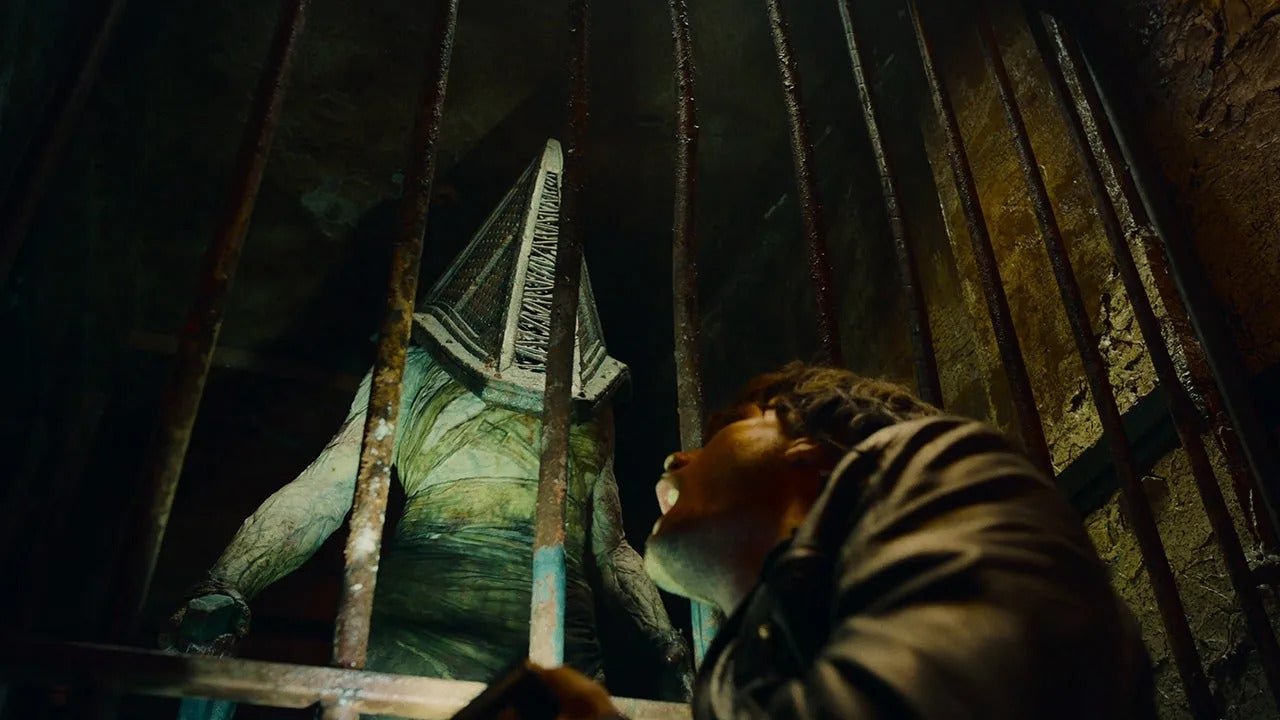
What follows is a condensed version of the game’s storyline. That’s certainly a proven formula at this point, but again, Return to Silent Hill’s most glaring flaw is that it doesn’t do anything particularly new or exciting with that formula. Given the sheer graphical fidelity of the Silent Hill 2 Remake, the prospect of seeing the game’s events play out in live-action simply isn’t enough. Heck, the game is by far the better-looking of the two. Return to Silent Hill’s low-budget trappings reveal themselves in the many shots of Irvine and others standing against obvious green-screen backdrops. The creature designs are still impressive in any medium, but the remake feels more visually refined and cohesive overall.
Nor are the performances up to the standard of the remake. Irvine is mostly fine as James, but the film doesn’t always give him much to do beyond send him careening down eerie hallways, screaming one character or another’s name. Only towards the end does James undergo more of a tangible emotional arc. And while it’s fun seeing Evie Templeton reprise her role as Laura from the game remake, she’s barely in the movie long enough to leave much of an impression. That goes for most of the supporting characters, really. In the effort to trim down a lengthy game narrative to a tight 100-minute film, these characters have been reduced to shells that appear only long enough to push the story forward. “Underdeveloped” barely scratches the surface here.
Return to Silent Hill can feel surprisingly aimless despite its modest runtime. With none of the obtuse puzzle-solving and little of the combat that defines the games, the film settles for following James as he runs terrified from one familiar landmark to the next and experiences flashbacks to his life with Mary. In ditching the interactive element, the story loses much of its power. The monsters still look cool, but they and the town’s Otherworld dimension don’t really inspire the same sense of dread.
On the subject of those flashbacks, that’s the one area where Gans and co-screenwriters Sandra Vo-Anh and Will Schneider attempt to distance Return to Silent Hill from its digital source material. Here we see the rise and fall of James and Mary’s romance, a story that proves far more complicated than the straightforward explanation the game provides. But, in this case, more complicated doesn’t equal better. While I can appreciate the attempts to both turn James into a more morally ambiguous figure and greatly flesh out Mary, the added mythology in these scenes feels campy and unnecessary. Annoyingly, the flashbacks and the characters they introduce are essentially abandoned by the end of the film, leaving me to wonder why they were introduced in the first place.
Worse still, the flashbacks end up working against the movie by fundamentally changing a critical element of James and Mary’s backstory. I suspect a lot of fans will take umbrage at how a major reveal is handled, both because of how it alters their relationship and renders much of the imagery and symbolism of the film nonsensical.
Again, it’s not all bad here. Even in this diminished state, the film retains enough of the visual and aural appeal of the source material to occasionally stand out. Pyramid Head and those nurses are damned cool in any medium. And having series composer Akira Yamaoka on board certainly doesn’t hurt in that area. This may be a deeply inferior version of the game, but an inferior take on one of the best horror games ever released still carries some weight.