The Witness and Braid Creator Jonathan Blow Announces New 250-Hour Puzzle Game, Order of the Sinking Star | The Game Awards 2025
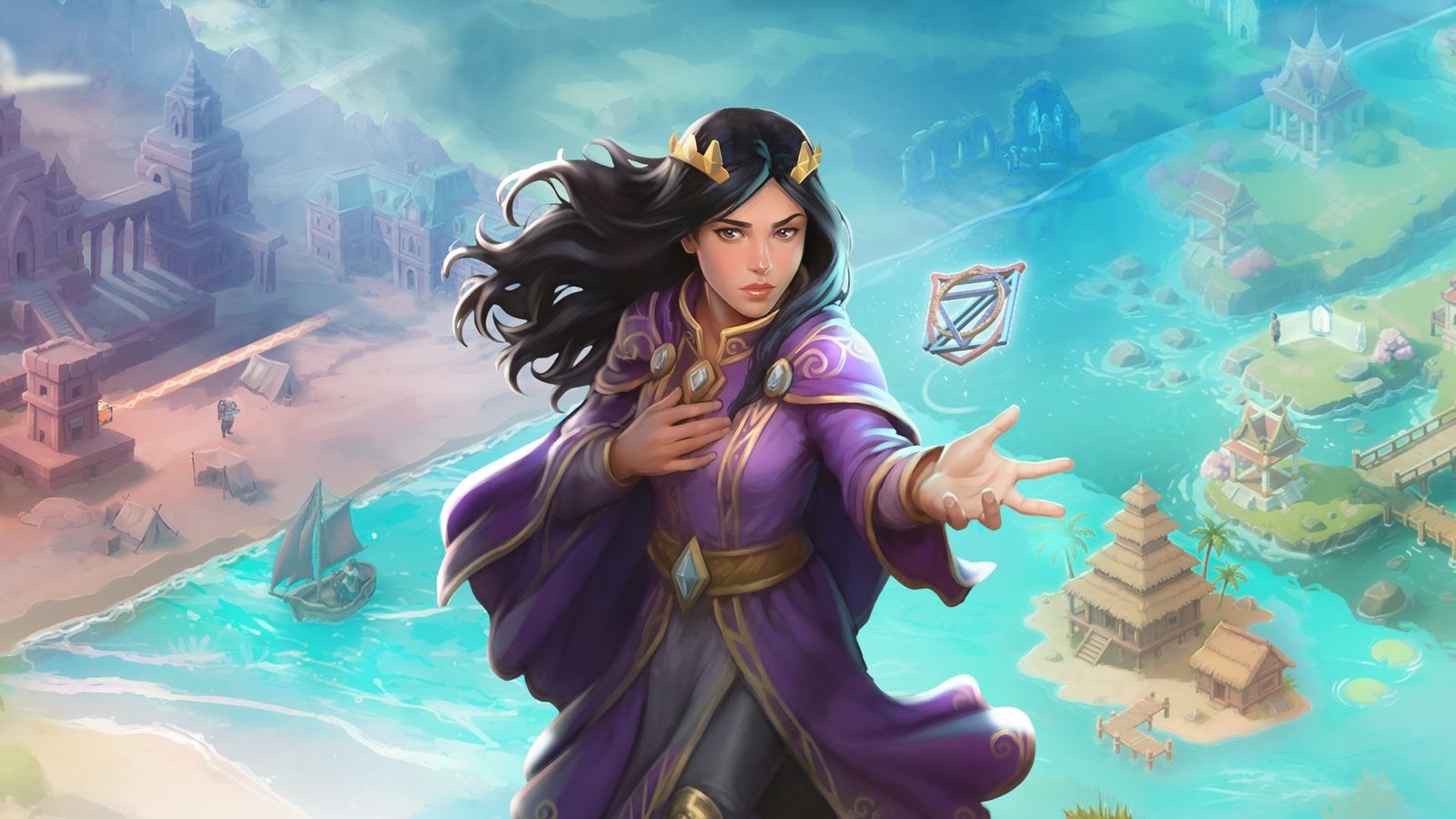

Puzzle games have changed a lot since The Witness hit in 2016, which showed us new ways of interpreting game environments and connecting the dots. And even in 2025 we had the likes of Blue Prince shake up our understanding with the twist of a roguelike deckbuilding puzzler. In the years since, the lead designer of Braid and The Witness, Jonathan Blow, had been working on a new project with a bigger team than his previous games — it’s called Order of the Sinking Star, which was revealed at The Game Awards 2025. It’s an ambitious project on paper — Blow said to have 1,000 individual puzzles and can take up to 250 hours to complete at a normal pace (and upwards 500 hours for completionists), but it’s the way it layers its gameplay mechanics as you get deeper into the game that’s the more impressive part.
I recently saw an off-hands demo of Order of the Sinking Star, which is a grid-based isometric adventure with a branching overworld that encompasses a large majority of its individual puzzles. Blow showcased a number of these puzzles in real time; it started out with simple block-pushing mazes that worked as a brief tutorial for how different characters interact with obstacles — such as the thief who can only pull objects and the wizard who must swap places with objects in line-of-sight. However, later levels began to stack more variables that add complexity to the objective of simply going from point A to point B.
Mirrors that teleport you (or objects) across gaps equal to your distance from the mirror itself, or hostile creatures that will kill you if you move to an adjacent block on the grid, or beams that can phase you through walls; these are a few of the things I saw in action. Each puzzle teaches you how these mechanics work by introducing them in a basic challenge without explaining them outright and gets increasingly difficult as you progress — fairly standard stuff. Like Braid, you also have a rewind tool to move back as many steps as you want, which makes it easier to experiment with a puzzle’s variables instead of constantly having to restart a puzzle from the beginning. But it’s when these mechanics are used in multiple combinations that test your understanding of them and build on that knowledge when you have to consider your moves several steps ahead.
When mixing in the specific ways in which each character interacts with objects on the grid, you’ll have many more layers to consider as puzzles expand in size and complexity. I saw one room in the overworld that asked you to jump through gates on the grid to switch characters and tee up the obstacles for each of them — since the wizard must swap spots with blocks across from him, he’ll get stuck behind a block locked behind a gate so you have to find a way to pull a new block from across the grid to make sure the wizard get in the right position to when he has to teleport. Another twist I saw was having a character replicate themselves by phasing through multiple mirrors at once, making you control clones simultaneous, which leads to interesting solutions for certain puzzles.
Zooming out to a bird’s eye view of the overworld showed just how expansive Order of the Sinking Star will be — and in a way that felt overwhelming. You start exploring the puzzles available in any of the cardinal directions, letting you go as far as you want in one direction and leaving open the option to go in a different one in case you get stuck. The overworld itself has puzzles that unlock new sections of the map as a way of progression, creating additional layers to the puzzle-solving And perhaps you’ll have a eureka moment in the process that will shine a light on previous puzzles to make more of these pieces make sense.
The thing I’m hesitant about is its overwhelming nature being intimidating that it becomes daunting to engage with. And retaining the knowledge that you’ve built up for subsequent puzzles may just get lost over time if you take an extended break from playing. From what I’ve seen, even tracking what you did and didn’t complete in the overworld might get tough even though the map does have glints to highlight key locations to visit and explore.
I asked Blow about how he and the team have thought about guiding the player and balancing a general hands-off approach. He said they’re considering implementing a hint system or a limited-use mechanic to nudge players in the right direction, but it’s tricky since he doesn’t want it to become a crutch. He went on to mention that the environmental design of puzzle rooms can be instructive as well and intends to contain visual cues for what’s important to look at as you find solutions.
There also seems to be an underlying story with each series of puzzles where different sections of the overworld put you in control of characters from various timelines in the game’s lore. And the ways these timelines intersect and showcase cooperation between various civilizations might have something to say about what happened to their world and perhaps have a broader message about human cooperation. So far, it feels similar to The Witness where very little is told to you and the mystery slowly unravels, but this time you have distinct characters with voice lines who will interact with each other in small ways as they cross paths throughout the game’s puzzles.
Order of the Sinking Star is also meant to showcase the proprietary game engine and programming language that Blow has been working on in tandem, and intends for it to be available as an open-source tool shortly after the game’s release. As far as release date, all we know for now is that Order of the Sinking Star is set to launch sometime in 2026 on PC and other platforms at a later date.
Be sure to check out everything announced at The Game Awards 2025 for more, as well as the winners list in full.
Michael is the tech reviews editor at IGN, but regularly contributes to games coverage with reviews, features, and news.